
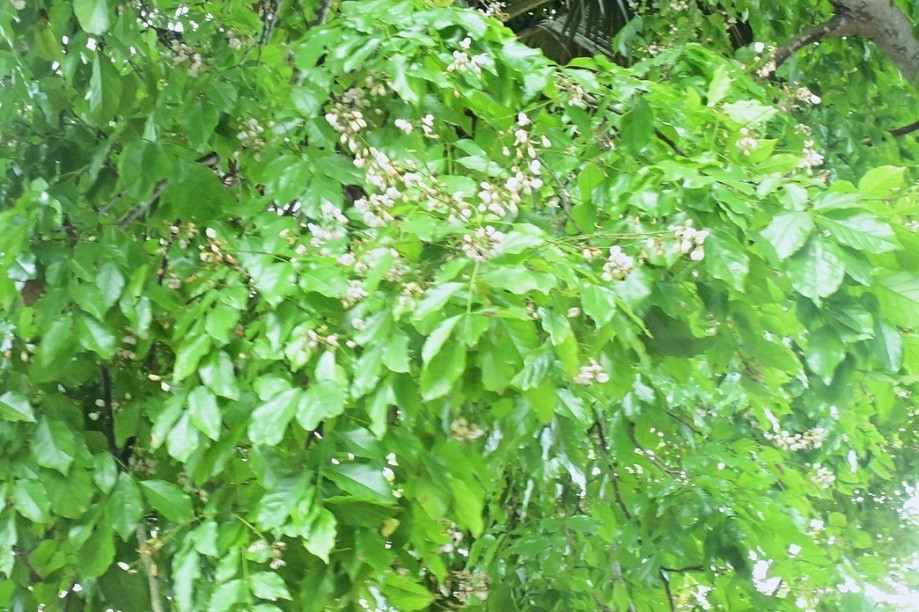
Pongamia pinnata (L.) Pierre
Campus Location
Rajagiri Business School, Valley Campus, Kakkanad
Systematic position
Kingdom: Plantae
Phylum: Streptophyta
Class: Equisetopsida
Order: Fabales
Family: Fabaceae
Pongam Tree is native to eastern and tropical Asia, Australia, and the Pacific islands. It grows to about 15–25 m in height with a large canopy which spreads equally wide and creates dense shade. Glabrous branches with pale stipulate scars. The imparipinnate leaves of the tree alternate and are short-stalked, rounded, or cuneate at the base; ovate or oblong along the length, small clusters of white, purple, and pink flowers. The fruits are pods contain within them one or two bean-like brownish-red seeds.
- It is often used for landscaping.
- The wood is used as firewood, posts, and tool handles.
- Seed oil used as lamp oil, in soapmaking, and as a lubricant.
- The plant is used in traditional Ayurvedic medicines.